
HH House
Highgate Hill, 2020-current
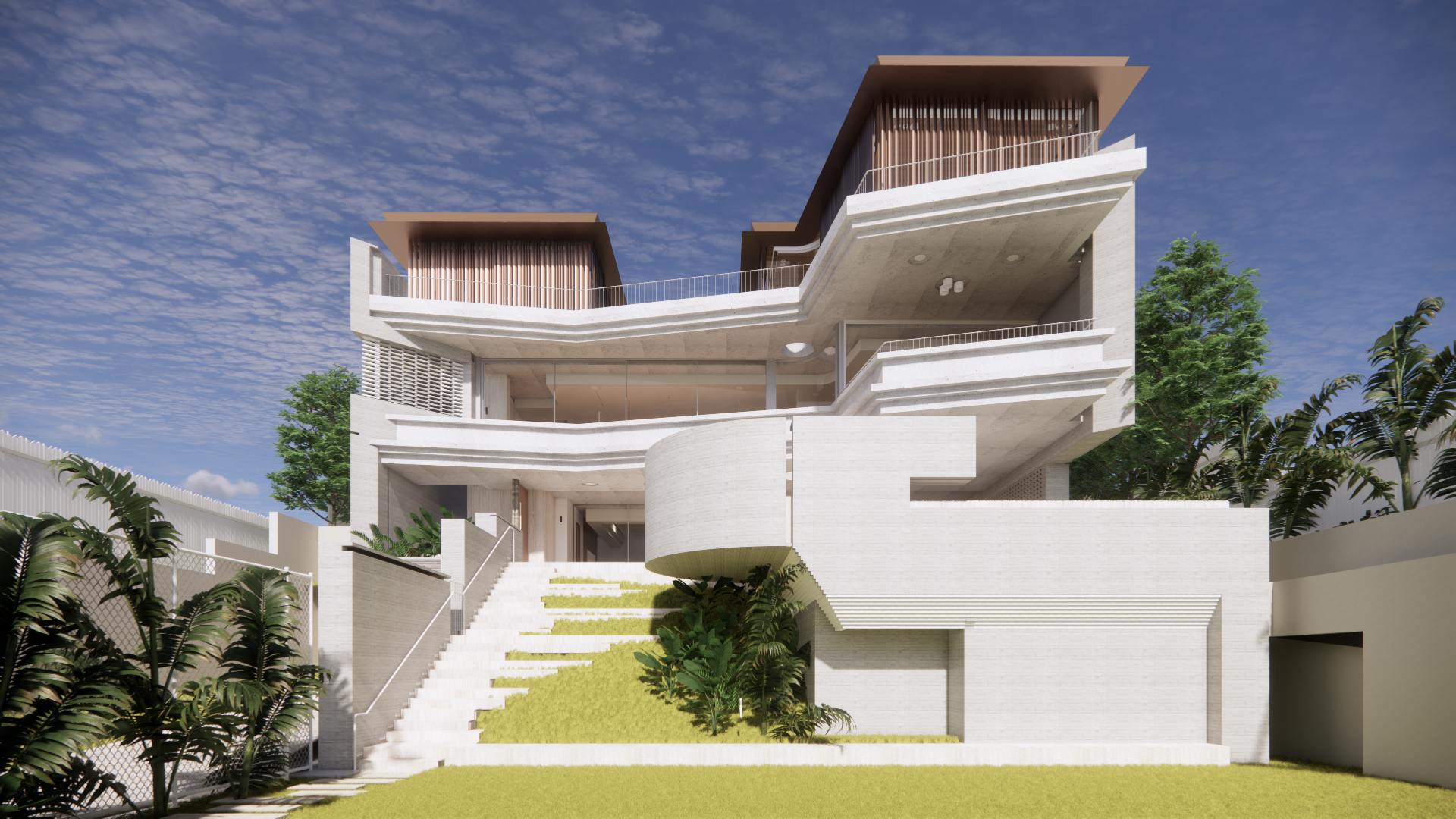
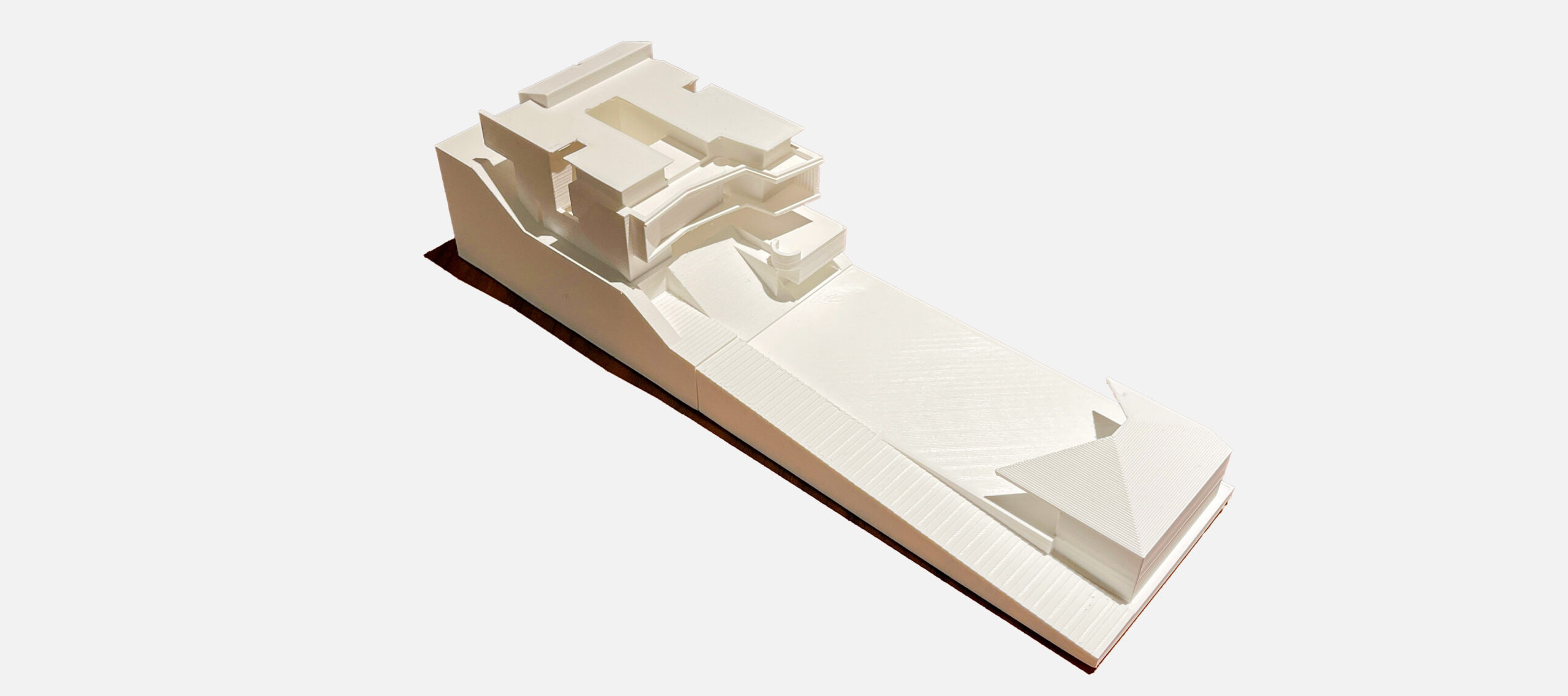
The HH House is conceived as an architecture of permanence, shaped by the breadth of its hillside setting and the rare expanse of its north‑facing orientation. Two buildings occupy the 1805m2 sloping site: the original heritage timber residence, which maintains the character of the street and its context incorporates a tennis and sports pavilion; and a new living and sleeping pavilion embedded within the hillside, positioned to overlook a central landscaped court, the tennis court, and the sweeping panoramic city views beyond.
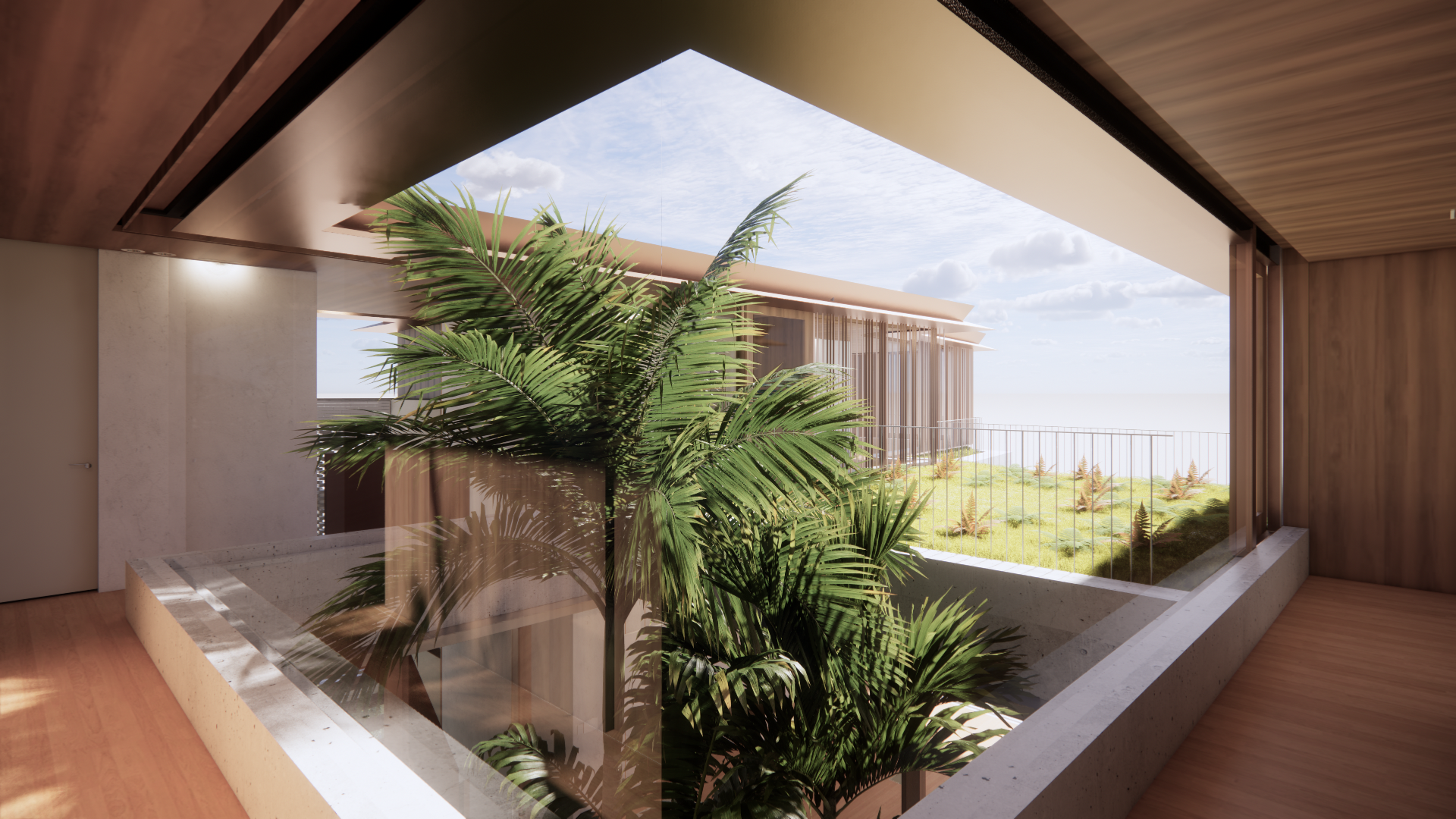
The planning of the new residence is anchored by a central landscaped courtyard that draws natural light deep into the interior and establishes continuous visual and spatial relationships across the site. Living areas are oriented toward the view and composed with calibration rather than overt expression, framed by deep thresholds that modulate light, climate, and privacy while retaining the expansive panorama as a constant backdrop. All rooms are deliberately aligned to capture uninterrupted views.
The architectural language is defined by a disciplined palette of concrete, brick, and glass. Bedroom spaces on top are conceived as, nest‑like elements perched on the masonry ledges established by the living zones below. The design resists excess, relying on proportion, material integrity, and structural clarity to cultivate a sense of calm and longevity. Strong horizontal planes ground the home within the hillside, reinforcing its dialogue with the terrain and the subtropical landscape.
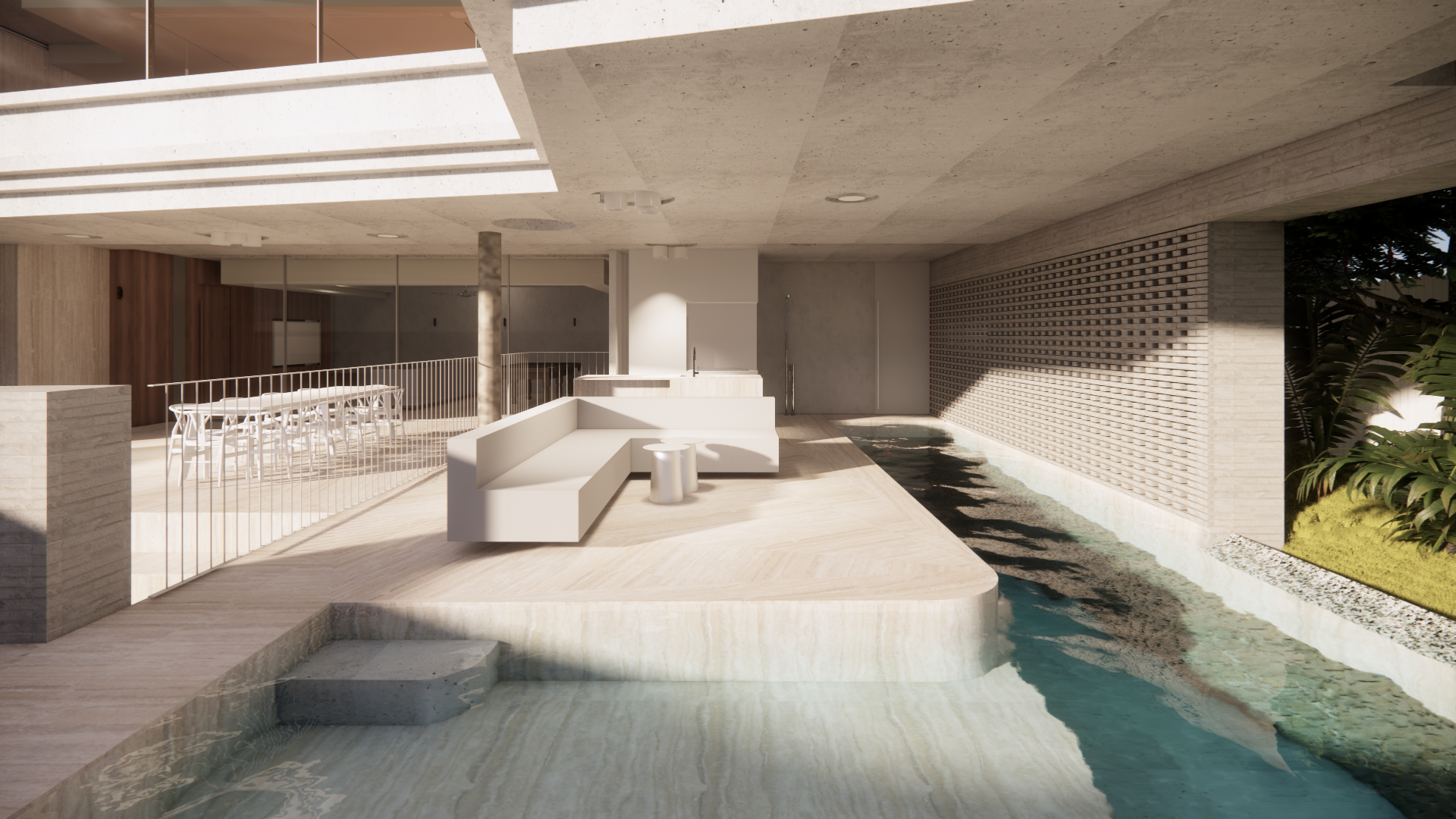
A terraced belvedere structure is carved and cantilevered out of the hillside to accommodate a pool that is embedded within the architecture. This gesture extends the elevated inhabited ground plane toward the 270‑degree panorama, intensifying the experience of water throughout the home. The result is a substantial hillside dwelling—monumental in its restraint and timeless in its intent—crafted to endure and to elevate the qualities of subtropical living.
Traditional Owners and ongoing custodians of the land
the Turrbal and Yuggera peoples