
Glasshouse Theatre
Queensland Performing Arts Centre, South Bank
Blight Rayner Architecture in partnership with Snøhetta
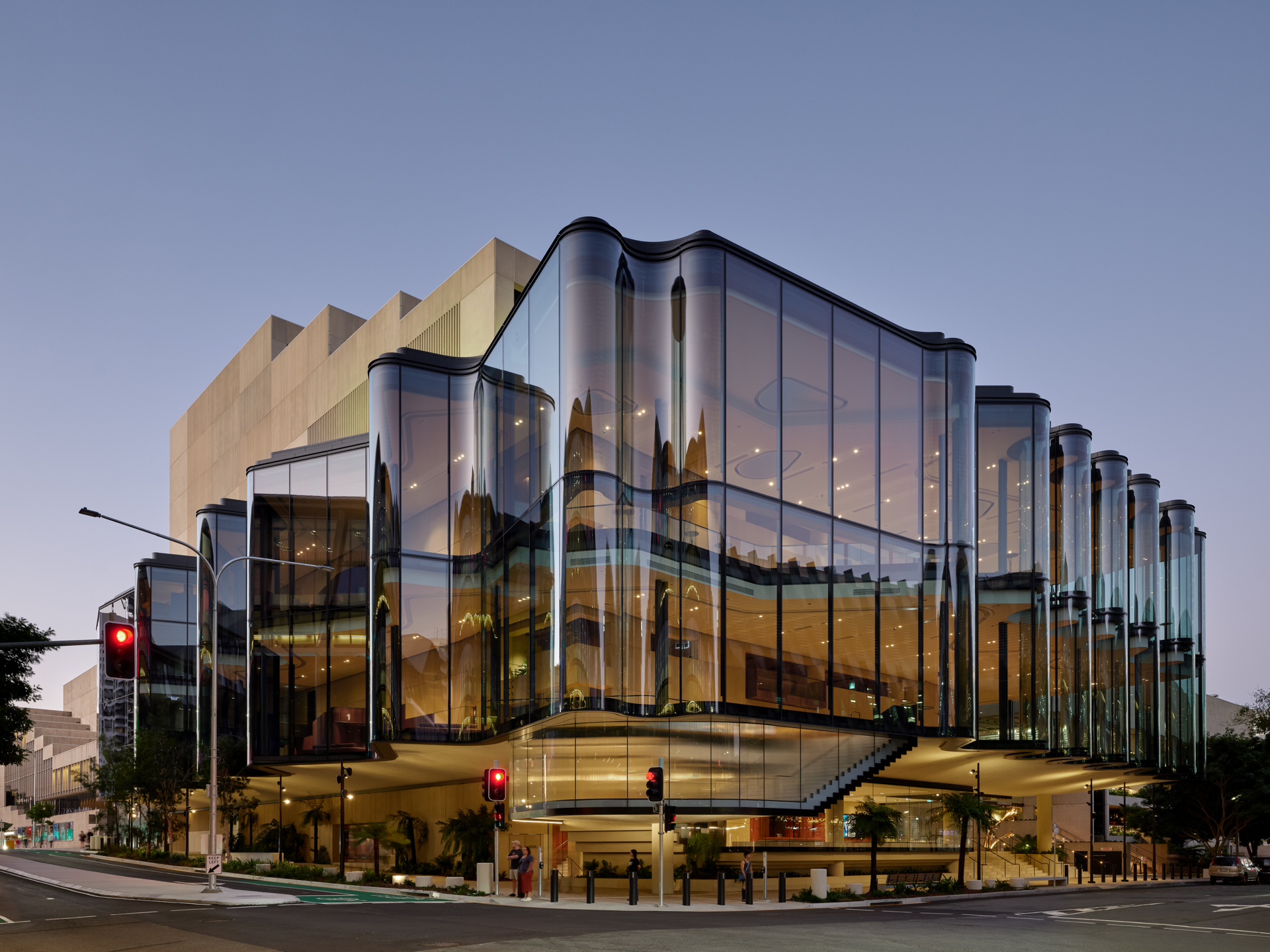
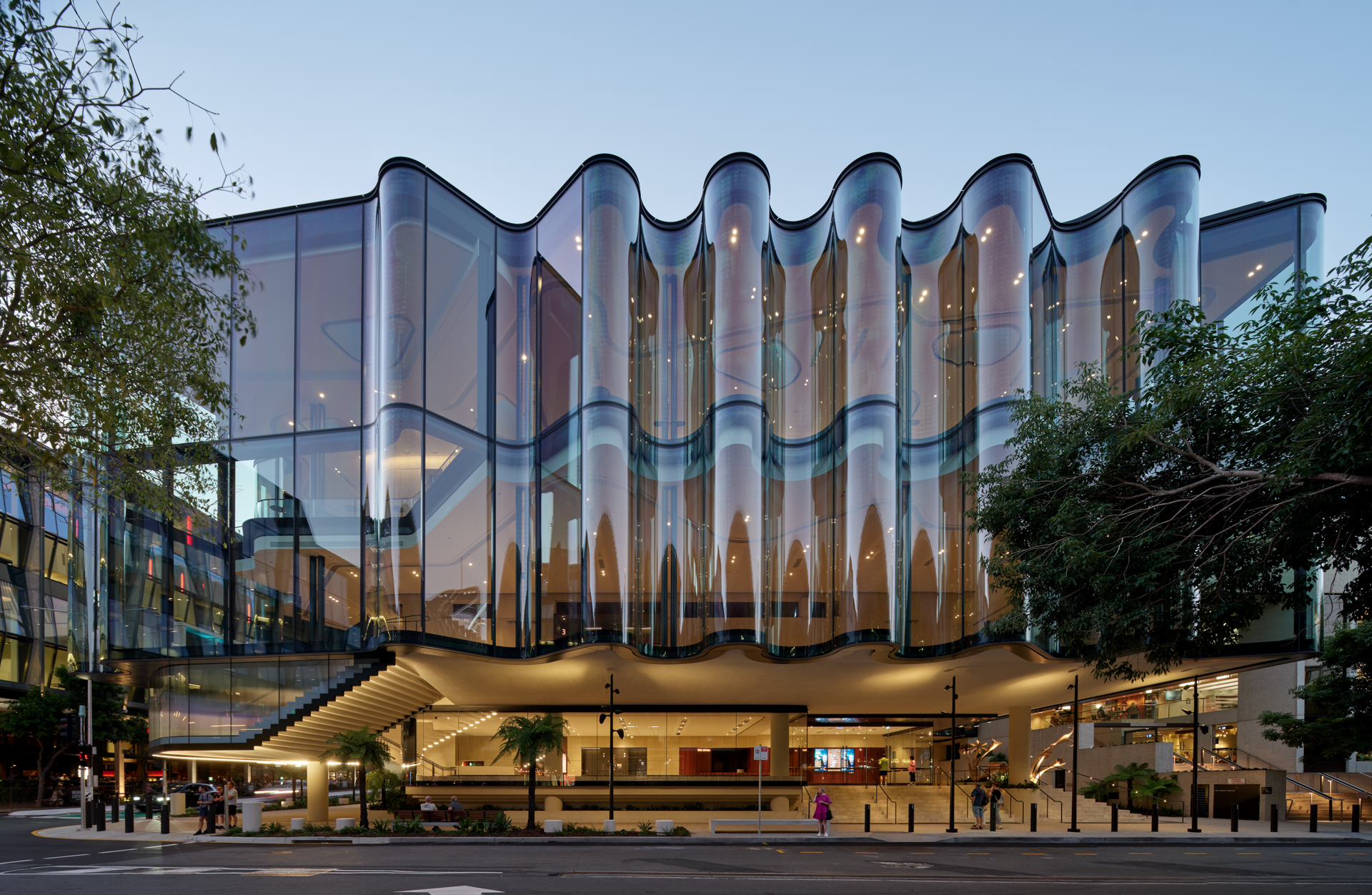
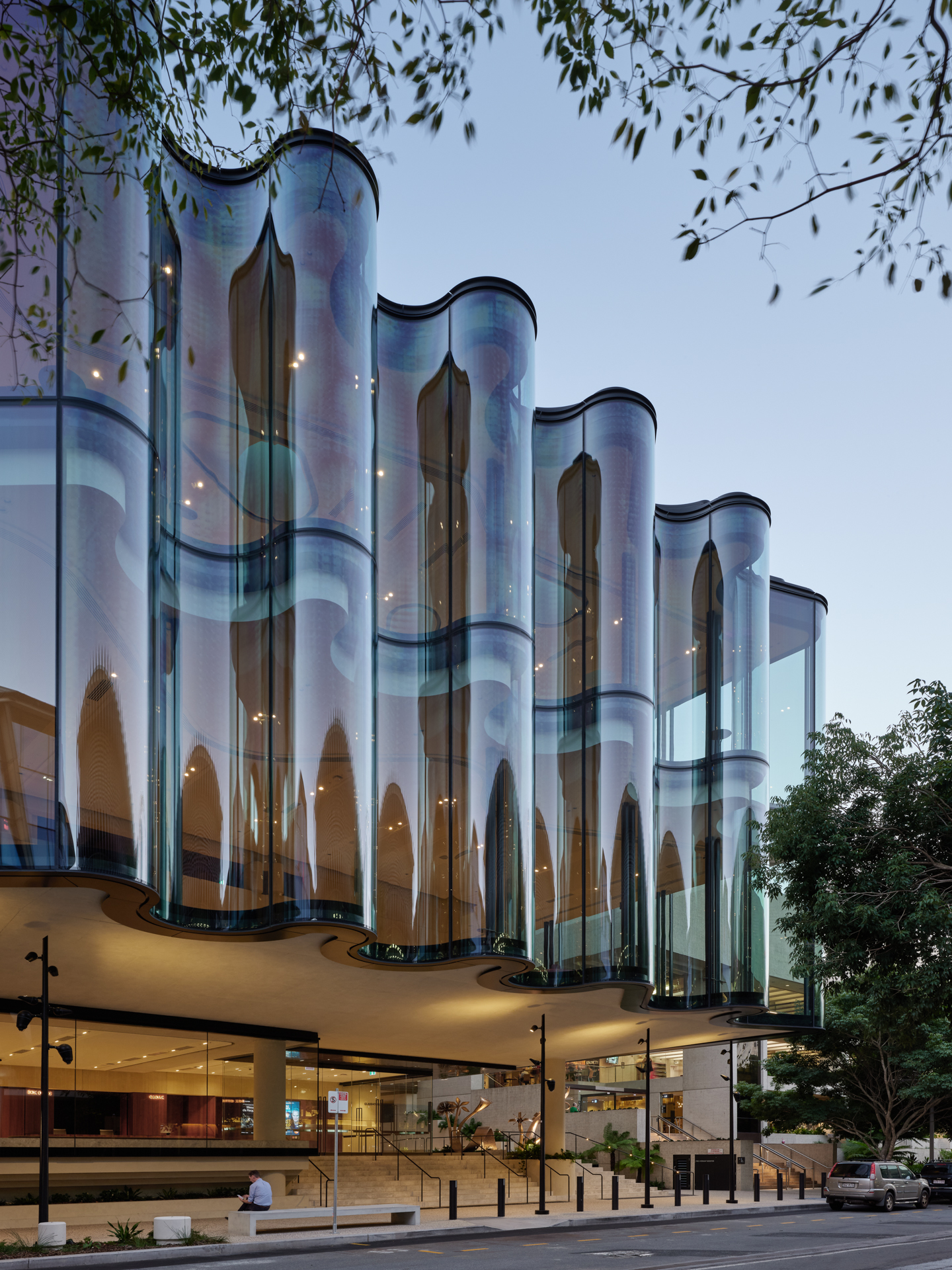
Queensland Performing Arts Centre’s (QPAC) new Glasshouse Theatre in South Bank is a sight to behold, veiled in its strikingly rippling glass walls that contain arguably the most versatile theatre in Australia.
Designed by Blight Rayner Architecture in partnership with Snøhetta, the 1,500 seat venue makes QPAC the largest performing arts centre under one roof in the country. It is the only theatre in Australia capable of presenting world-class ballet, dance, symphony, opera, theatre and musicals to the same standard.
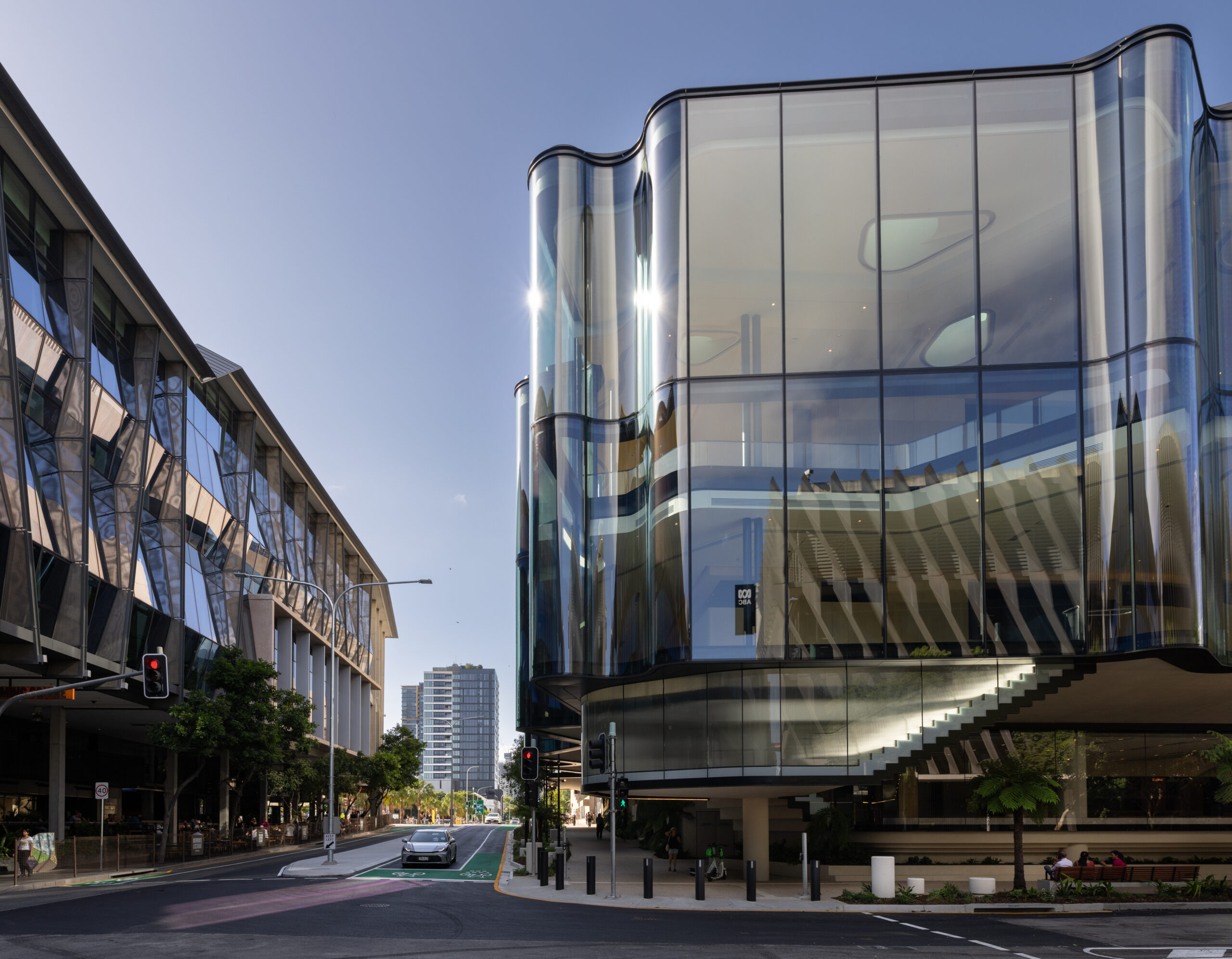
Blight Rayner and Snøhetta won an international design competition for the project in May 2019. The brief had allowed for the building to cantilever some 6 metres out on its two street frontages in order to fit the required size on to the site, an unbuilt corner of the QPAC complex.
The architects’ idea was to create a highly transparent edge to the cantilever to minimise its visual impact. Seen through it, the theatre ‘block’ aligns with the existing building as one part of the strategy to respect the heritage status of QPAC.
The idea of undulating the glass façade emanated from a prose-poem written by Aboriginal Elder and artist Lilla Watson which referred to ripples of the Brisbane River and fish swimming underneath the surface.
Blight Rayner Director, Michael Rayner explained:
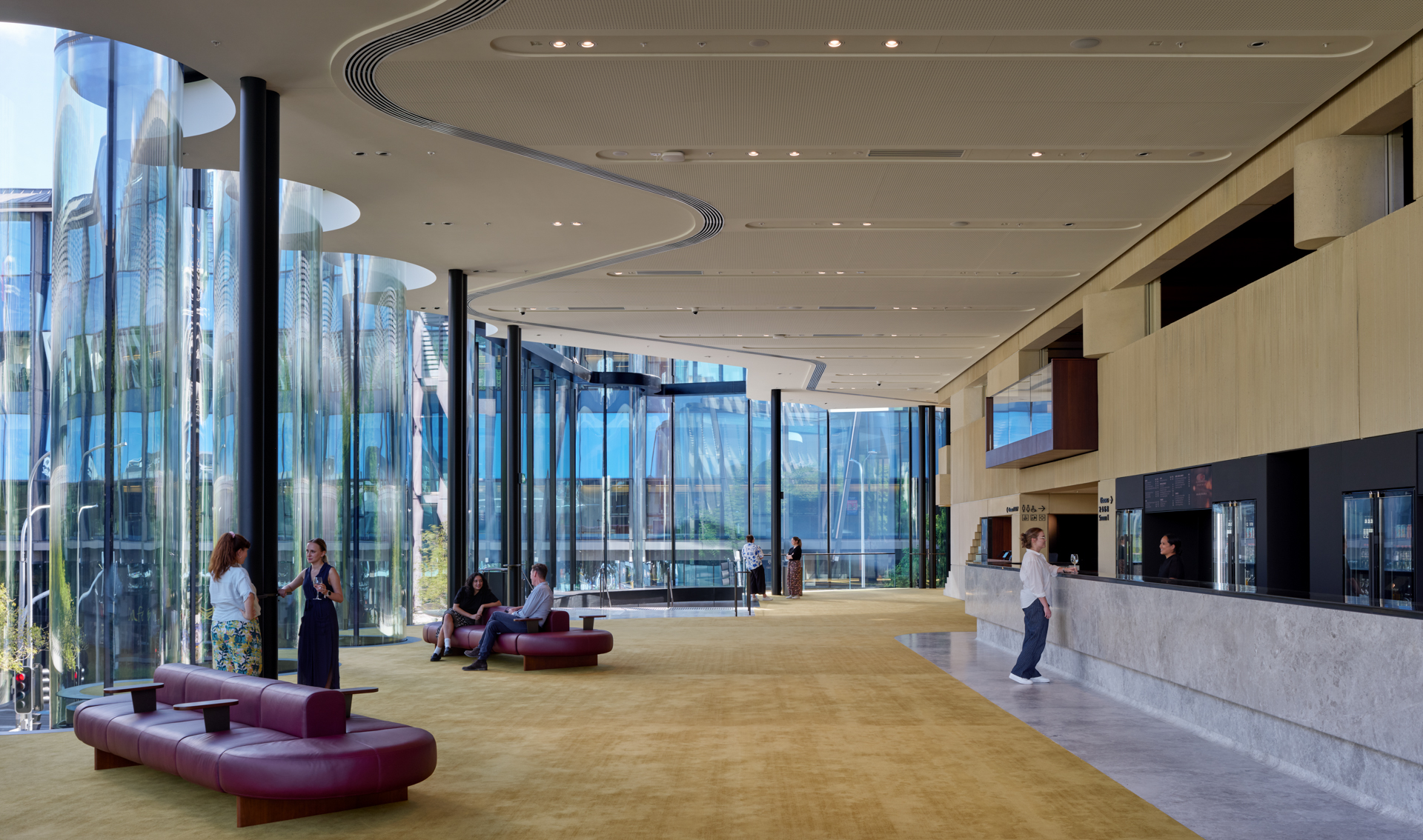
“We thought to make the transparent façade a setting for a kind of public theatre where people in the foyers would be seen variously clear and blurred from the street. And we wanted to embed the beginnings of First Nations narratives related to the context into the design”.
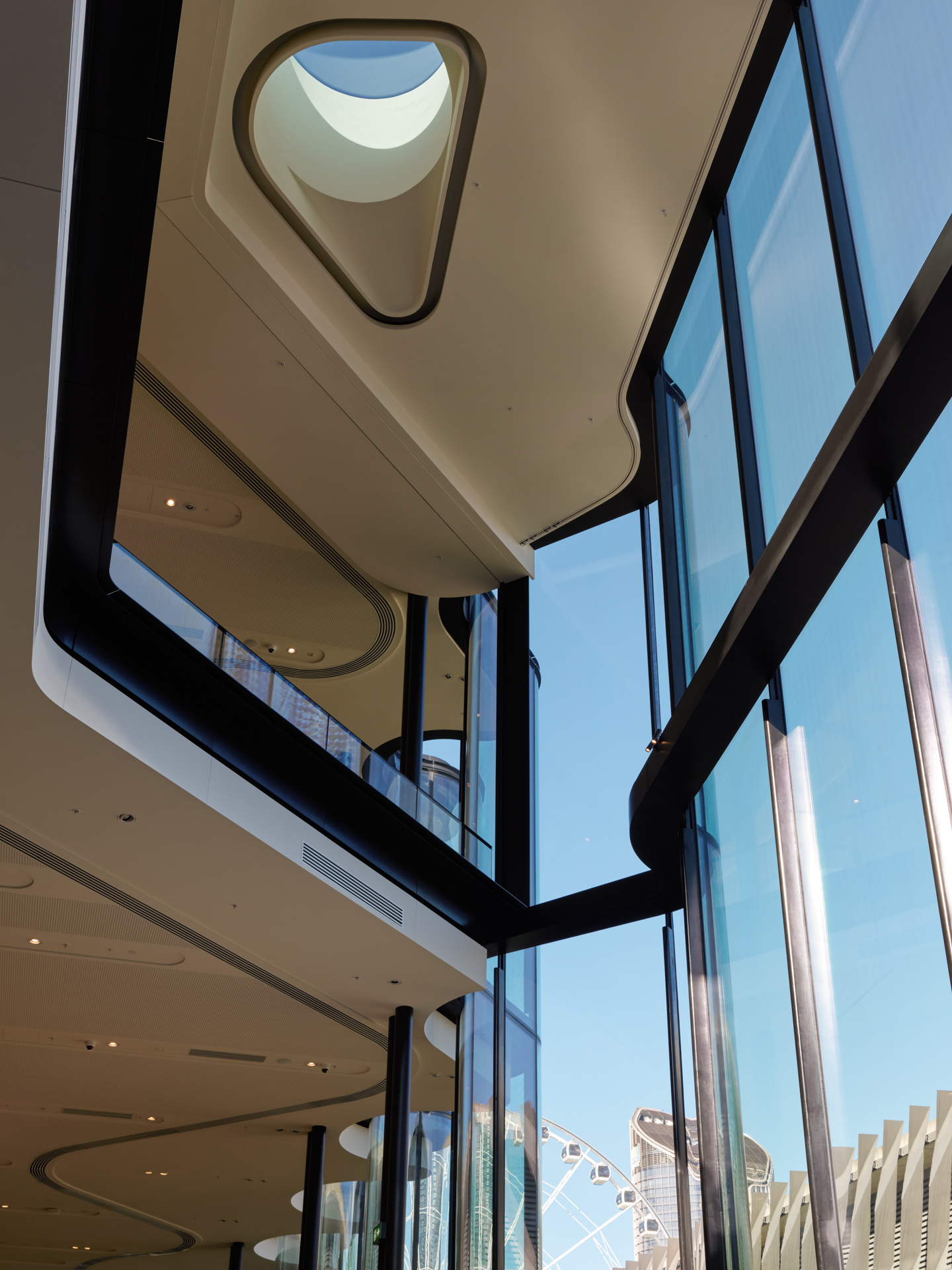
One of these narratives concerns seven skylights in the roof representing the 7 watersheds of Queensland, based upon research by Elder-in-Residence at QPAC, Aunty Colleen Wall. This is complemented by the sculpture Floriate by Torres Strait Islander artist Brian Robinson that features 7 emblematic flowering plants that grow in abundance across Queensland.
Blight Rayner director Jayson Blight remarked:
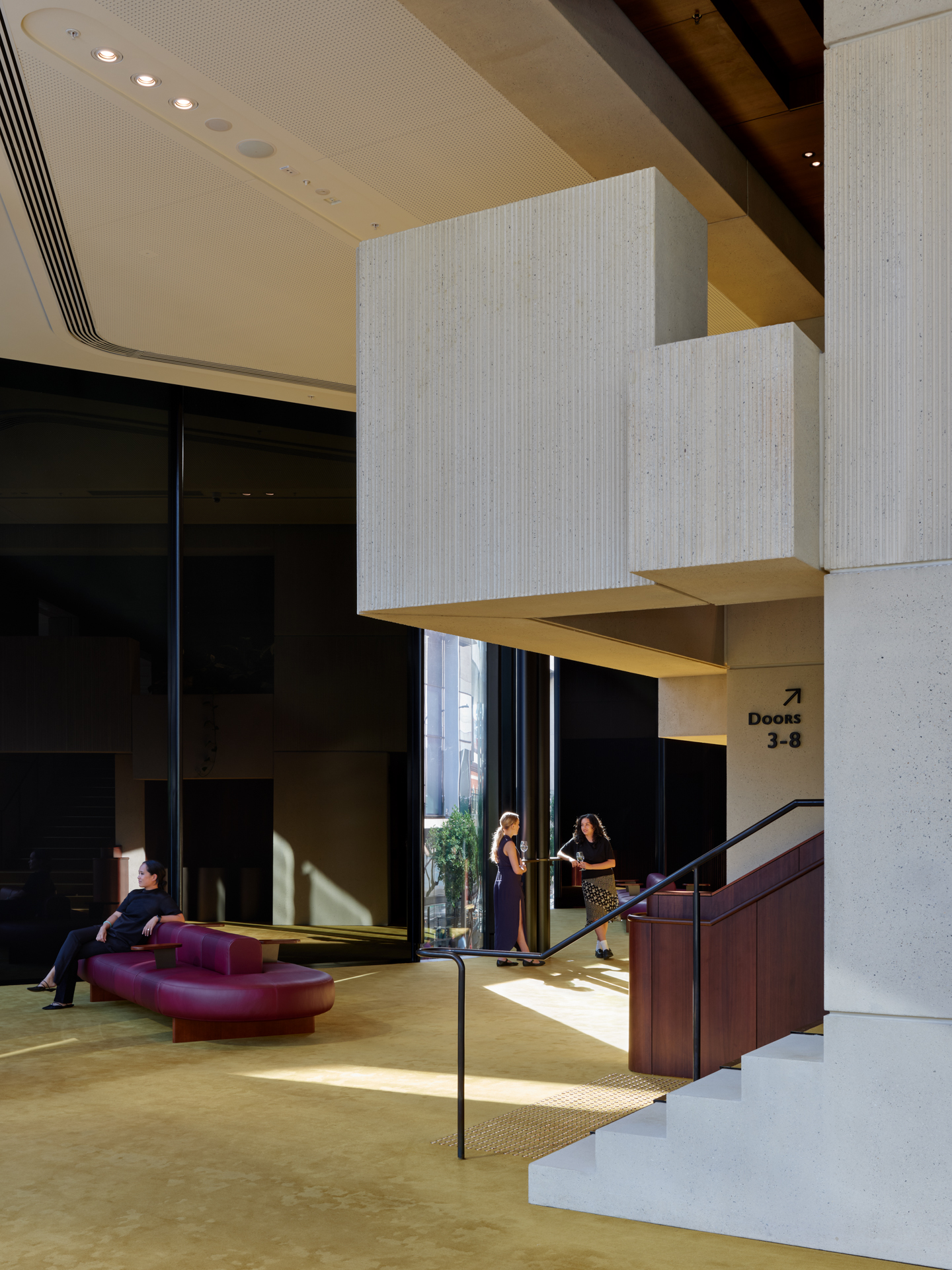
“We’ve tried through the design to maximise engagement between the public life of the city and the performing arts, and make the arts feel more accessible”. These spaces are due for completion in 2027.
The wavy glass walls give dramatic character to the foyers. They are highly engineered for thermal performance, fabricated in four layers with an intervening air gap. The facets that receive direct sunlight are embedded with a black ceramic inlay that acts as an integrated louvre to block solar penetration, optimising the building’s energy performance and minimising glare.
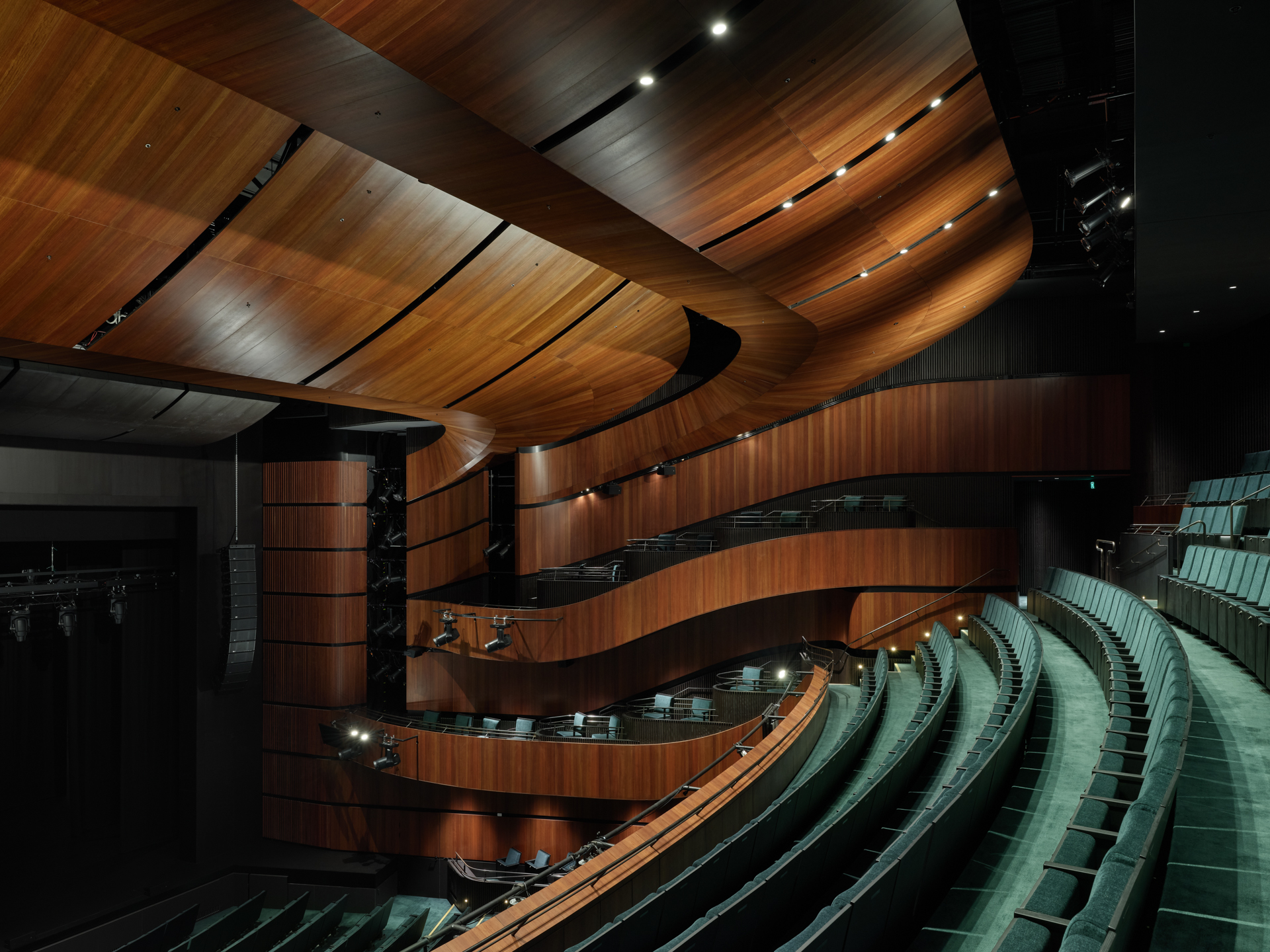
The lightness and airiness of the foyers contrast dramatically with the theatre interior, conceived like a cocoon of dark grey ironbark walls and rainforest green carpet.
“The auditorium was conceived as a highly adaptable performance environment capable of hosting a wide spectrum of artforms. The theatre was designed to operate like a finely tuned musical instrument – adjustable to support world-class opera, ballet, dance, symphony, theatre and musical productions,” says Gumji Kang, Managing Director of Snøhetta Australasia.
“Inspired by the qualities of stringed instruments, we have combined technical precision with atmospheric intimacy, enriched by layered timber ribbons that feel quintessentially Queensland,” says Kang.
The distance from the stage to the furthest seat in the theatre is only 28 metres, only 3 metres longer than a half-Olympic pool. Together with wrap-around balconies, the atmosphere is incredibly intimate for both patrons and performers.
The orchestra pit has three floor sections that can be raised or lowered independently to accommodate orchestras of different sizes, and there are four different pit configurations, two more than the conventional two. The fly system is fully automated, with the fly tower being 24 metres high and fly lines extending out for objects and performers to reach far out over the audience.
Rachel Healy, CEO, QPAC, said the project represents contemporary cultural infrastructure that will shape the precinct for decades.“New cultural infrastructure of this scale is rare. Glasshouse Theatre expands what QPAC can do and how the public can experience this place as both a civic destination and a performance venue.”
Jayson Blight remarked:
“Our Blight Rayner / Snøhetta team spent a huge effort perfecting the theatre along with our key consultants Schuler Shook and Acoustic Studios. We equally hope that the Glasshouse Theatre becomes recognised for the contribution it makes to the city, in a civic sense as well as culturally.”
Key Facts
- The glass façade consists of two tiers of 7 metre high panels, with an overall height of 14.28 metres – each panel is unique
- It was manufactured by Austrian company Seele who also created the renowned 5th Avenue Apple retail store in New York
- The auditorium has two levels with 1000 seats in the stalls and 500 at the balcony level – a gradual elevating of the seating enhances sightlines up through the stalls
- There are 100 fly bars in the fly tower, all fully automated
- An in-house digital broadcast suite enables live performances to be broadcast to towns and cities Australia-wide including livestream production in 4K HDR with Dolby Atmos sound quality
- Aunty Lilla Watson’s prose poem which inspired the glass façade is displayed as part of a visual artwork at the entry to kuril dhagun in the nearby State Library of Queensland
- The automated fly system comprises 107 hoists and 29km of steel wire controlling theatre scenery, lighting rails, battens and curtains, and moving bars up and down at up to 1.8 metres per second.
Traditional Owners and ongoing custodians of the land
the Turrbal and Yuggera peoples
Media Contact
Justin Smith, smith@rowland.com.au, 04300 55 584
Awards
2024 Shortlisted for World Architecture Festival Awards, Future Projects - Culture